
Design & Seasonal Care
Flower Bed Design & Maintenance in Huntsville & Madison, AL
Your flower beds set the tone for the entire property. Pina Lawn handles every part of bed care — building new planting areas, removing invasive weeds, refreshing ground cover, and installing plants that actually survive North Alabama's humidity, clay soil, and temperature swings.
Call 256-945-1407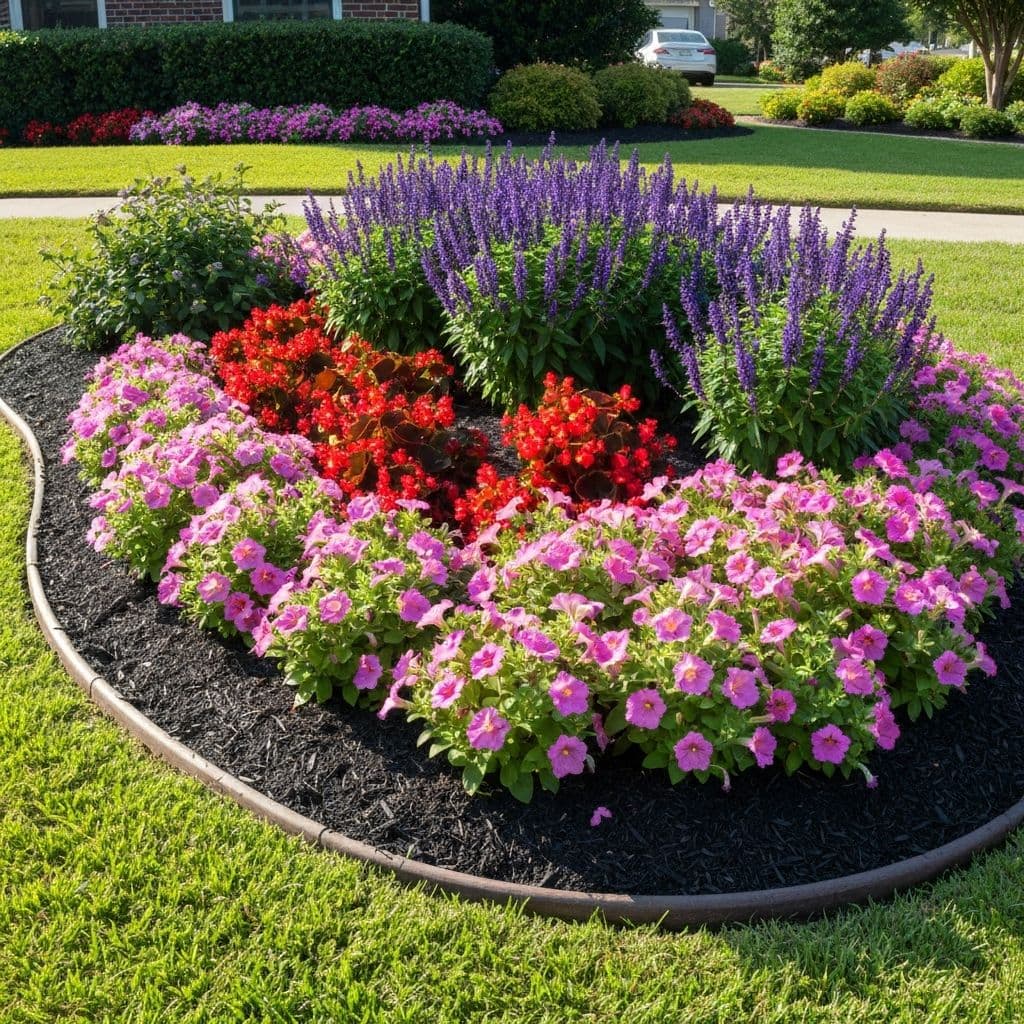
What's Included
Every Visit Covers
Before touching a single plant, we walk the property with you. We look at what's thriving, what's struggling, where water pools after rain, and which areas get direct afternoon sun versus morning shade. That assessment drives every recommendation — no cookie-cutter plans, just work that fits your specific lot.
On-site consultation to evaluate light conditions, drainage patterns, and existing root systems before any work begins
Hand-selected plant installations chosen for North Alabama heat tolerance, bloom duration, and pollinator value
Mulch or pine straw application at proper depth to block weed germination and hold ground moisture through dry spells
Targeted weed extraction and crisp edge cutting to separate turf from planting areas with a sharp visual line
Deadheading, selective pruning, and thinning of established perennials, shrubs, and ornamental grasses to encourage new growth
Organic soil conditioning and targeted nutrient supplementation to strengthen root networks and extend flowering periods
How to Tell Your Flower Beds Need Work
Most bed problems develop gradually, so they're easy to overlook until a neighbor's landscaping makes the contrast obvious. Here are the warning signs homeowners across Huntsville, Madison, Owens Cross Roads, and Meridianville ask us about most.
Persistent Weed Pressure
When weeds keep returning within weeks of pulling them, the root cause is usually thin ground cover, exposed soil, or weed seeds that already scattered. A targeted approach — deep extraction, fresh mulch at proper depth, and clean bed edges — breaks the regrowth cycle instead of just trimming what you can see.
Ground Cover Thinning Out
Mulch and pine straw decompose steadily in Alabama humidity. Once the layer drops below two inches, bare soil starts showing through, weeds find openings, and moisture evaporates faster during hot stretches. A properly measured top-up restores the protective layer and sharpens the visual contrast against your lawn.
Plants That Look Stressed or Overgrown
Stems stretching sideways, leaves yellowing from the bottom up, or mature plants that stopped flowering entirely — these point to root crowding, wrong sun exposure, or depleted soil nutrients. We diagnose what each plant actually needs before pulling anything out unnecessarily.
Gaps Between Bloom Cycles
If your beds are bare for weeks between one plant finishing and the next one starting, the issue is planting timing and variety selection. Staggering bloom periods with a deliberate mix of early, mid, and late-season plants eliminates those dead stretches entirely.
Why Zone 7b Demands a Local Approach — Planting Schedules That Actually Work Here
Big-box garden centers stock plants for broad climate ranges, and the care instructions on the tag assume conditions that rarely match what Huntsville and Madison properties actually deal with. Our area gets late freezes that catch early plantings, followed by summer heat that punishes anything not adapted to sustained 90-degree stretches with high humidity. The window between comfortable planting weather and punishing heat is shorter than most guides suggest, which makes timing the single biggest factor in whether a bed investment pays off or needs redoing in eight weeks.
Month-by-Month Bed Care for the Tennessee Valley
- Late January–March: Apply ground cover before soil temperatures climb past 55°F — that threshold triggers crabgrass and other warm-season weeds. Put in cold-hardy annuals like pansies, dianthus, and stock while nights still dip near freezing; they tolerate light frost and fill beds with color while warm-season plants are still dormant. Split overcrowded perennial clumps now, before active growth begins.
- April–May: The primary warm-season planting window. Once overnight lows stay consistently above 50°F, install heat-tolerant annuals — lantana, pentas, coleus for shade, and zinnias for full sun. This is also the best time for new perennial installations since roots have the full growing season to establish before winter.
- June–August: Protect what is already planted. Remove spent flowers promptly to redirect energy into new buds. Extract weeds before they develop seed heads. Water deeply but infrequently during dry weeks — shallow daily watering trains roots to stay near the surface where they are most vulnerable to heat stress.
- September–November: Transition to cool-season displays: violas, ornamental cabbage, chrysanthemums, and asters replace spent summer annuals. Replenish thinning pine straw before it breaks down further over winter. Tuck spring-flowering bulbs like tulips and daffodils into the soil by mid-November for reliable March blooms.
Working With North Alabama's Soil and Weather Patterns
Most residential lots in our service area sit on heavy red clay that drains slowly after rain and bakes hard during dry spells. Plants that require loose, sandy soil will underperform here without significant amendment. The species that consistently thrive without constant intervention — rudbeckia, salvia, liriope, and native switchgrass — share one trait: they tolerate alternating wet and dry cycles without root rot or wilting.
Neighborhoods like Jones Valley, Hampton Cove, and the Providence area have many established azalea and camellia plantings that prefer acidic soil conditions. Pine straw naturally lowers soil pH as it breaks down, making it the better ground cover choice over hardwood mulch for these beds. We evaluate the existing plant mix in each bed and recommend the right ground cover material based on what is growing there, not a one-size-fits-all default.
Clean bed borders matter as much as what is inside them. Pairing bed maintenance with regular hedge and shrub shaping and consistent weekly mowing creates sharp transitions between turf and planting areas that make the entire front yard look intentional.
Pair With Our Other Services
A well-kept bed surrounded by an unkempt yard sends mixed signals. These complementary services bring the whole property up to the same standard.
Lawn Mowing & Maintenance
Consistent cut heights and trimmed turf edges create the sharp border that makes beds pop visually.
Hedge & Bush Trimming
Well-shaped foundation shrubs and manicured hedges tie the landscape together from curb to front door.
Yard Cleanup & Restoration
Overgrown or neglected property? We clear debris, cut back growth, and restore beds and lawn in one coordinated effort.
Sand Leveling & Top Dressing
Smooth out uneven ground around raised beds and walkways for a uniform, finished appearance across the yard.
Where We Work
Flower Bed Service Areas
Pina Lawn builds and maintains flower beds for residential properties across Huntsville, Madison, Meridianville, Owens Cross Roads, and surrounding Madison County communities.
Free Estimate
Get a Free Flower Bed Quote
Need new beds built, existing ones cleaned up, or a full seasonal planting plan? Call or submit the form for a no-cost assessment. No contracts, no commitments.
Call 256-945-1407FAQ
Flower Bed FAQs
What does flower bed maintenance typically cost in the Huntsville area?
Which plants hold up best in Huntsville and Madison yards?
What is the right planting schedule for this part of Alabama?
Do you handle mulch and pine straw installation?
Can you build entirely new beds on a property that has none?
How frequently should established beds be serviced?
Is flower bed service available in Madison, AL?
Can I bundle flower bed work with other yard services?
Get a Free Flower Bed Quote
Reach out today for a no-cost property assessment covering bed construction, plant selection, ground cover, and recurring upkeep.